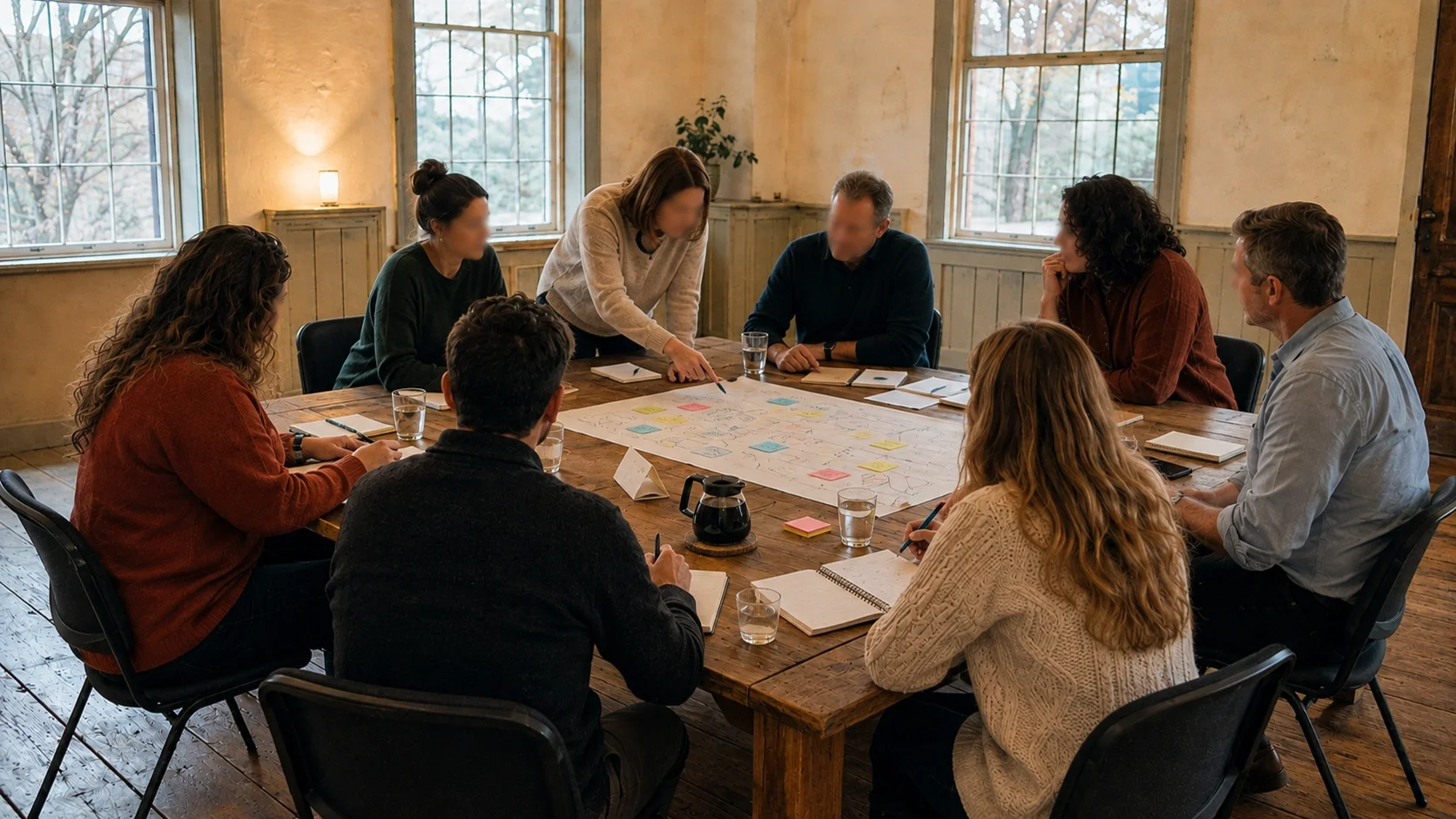
Small business owners in Bergen County ask about this in a fairly consistent way. The team is stretched, a couple of people are visibly running on empty, and there is a sense that something should be offered without much confidence about what.
This is written for that owner. What tends to be wasted, what tends to get used, and how to run something sensible with 5 to 50 people and no benefits department.
Why most of it goes unused
The standard corporate wellness package is built for large organizations and sold to small ones. An app subscription, a gym discount, a portal with resources, perhaps an employee assistance line. Each requires an employee to notice it exists, decide they need it, and act in their own time.
The people most in need of it are precisely the people least likely to do that. Someone genuinely depleted does not download an app and complete an onboarding flow. They get through the day and go home. So the benefit is used mainly by the people who were already coping, which is not what anyone intended to buy.
There is a second problem specific to small teams. Anonymity is not available. In a company of eleven, using the mental health benefit is visible to everyone, whatever the policy says. That alone suppresses uptake of anything that requires someone to identify themselves as struggling.
What works better
The pattern that holds up is: scheduled, in person, on work time, and offered to everybody rather than to people who put their hand up.
- Something recurring on the calendar. A regular session that simply happens, at a set time, without anyone having to opt in. In practice this is usually breathwork or somatic movement, both of which work in ordinary clothes and need no equipment. Attendance may be voluntary, but the appointment exists whether or not you remember to think about it.
- Delivered on work hours. This is the part owners resist and it is the part that determines whether any of it works. Wellness scheduled outside working time reads as an additional demand, which is the opposite of the intent.
- Available to everyone, not targeted. Nobody has to identify as the one who is struggling. In a small team this is the single most important design decision.
- Body-based rather than talk-based. A breathing practice, a movement session or a sound bath asks nothing of anyone verbally. Nobody has to disclose anything, which for a group of colleagues matters enormously.
- Short and repeated over long and occasional. Thirty minutes weekly builds something. A full wellness day once a year is an event, not a change.
Formats that suit a small team
Four shapes that tend to work at this size, in rough order of commitment.
A recurring session
A practitioner comes to you, or the team comes to us, on a regular schedule. Breathwork, somatic movement, or guided practice. Thirty to forty-five minutes. This is the lowest-friction option and generally the one with the best uptake, because after a few weeks it stops being a wellness initiative and becomes simply what happens on Wednesdays.
A team half-day
Useful at a specific moment: after a hard quarter, following a difficult period, or as a deliberate reset. Usually combines a session, something practical people take away, and time that is not about work. Better as a punctuation mark than as a strategy on its own.
A practical workshop
Nervous system regulation, sleep, or managing sustained pressure, taught in a way people can use rather than as a lecture. Works when it is genuinely applicable and fails when it is aspirational.
A referral pathway
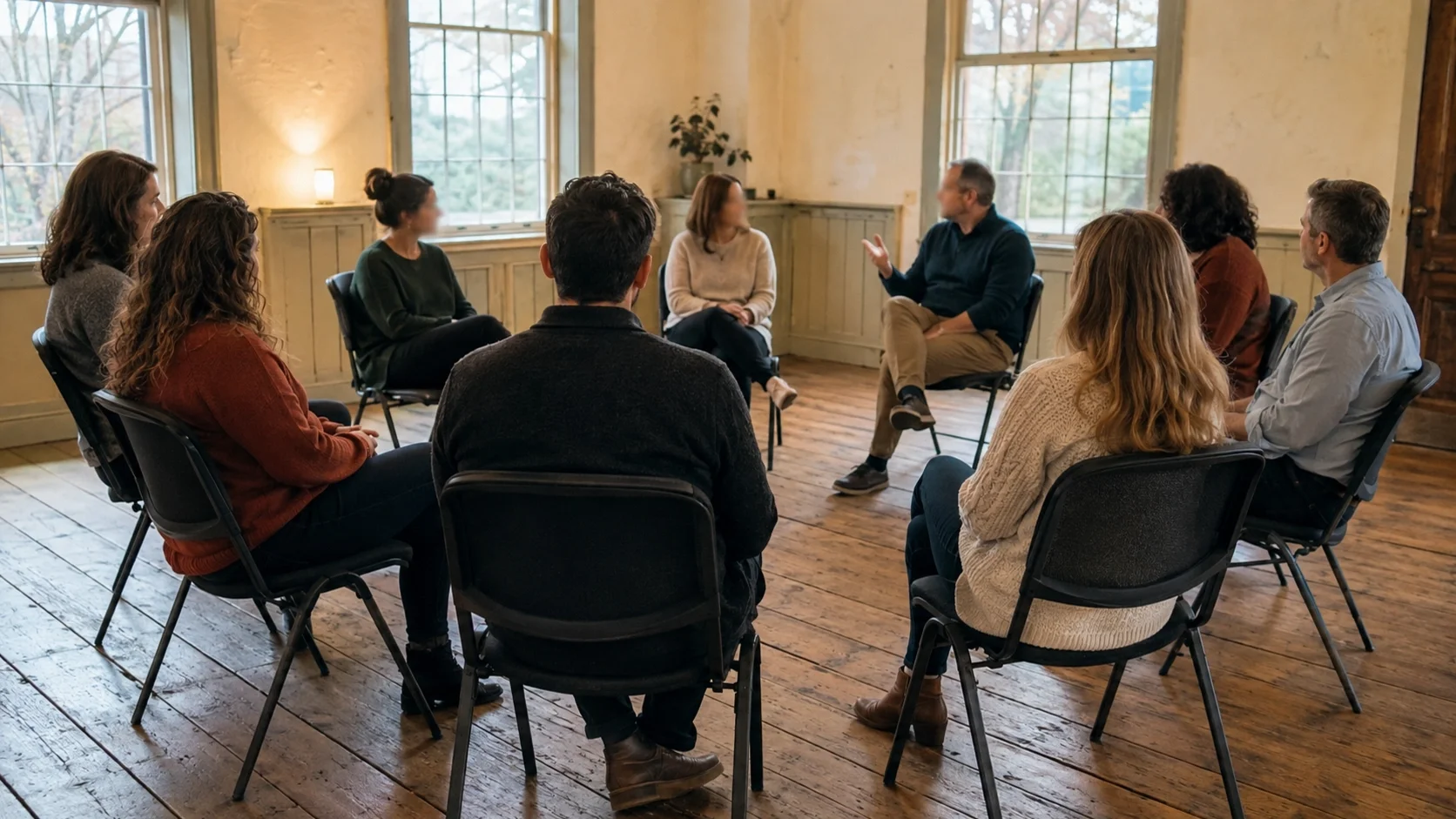
Less visible and frequently the most valuable. An arrangement whereby your people can access individual support directly, without going through you and without you knowing who has used it. For situations that are beyond what a group session addresses, this is the thing that actually helps, and it costs a fraction of most benefit platforms.
Two things worth being honest about
The first is that wellness provision does not fix a workload problem. If people are burning out because there is more work than there are hours, a breathing session is a courtesy rather than a solution, and the team will read it accurately as such. Anyone selling you a wellness program as the answer to understaffing is selling you something that will not work.
The second is that this is not therapy and should not be presented as such. Group wellness sessions support a team. Where an individual needs clinical support, they need a clinician, and the useful thing an employer can do is make that route easy to find and free of any requirement to explain themselves. Where grief is involved, which in any team of a certain size it periodically is, our sister practice Grief Unbound has written specifically about what returning to work after a loss is actually like, and it is worth a manager reading.
Where to start
Ask the team, in a way that does not require them to answer in front of each other. A short anonymous question about what would genuinely help works better than a decision made by whoever is most enthusiastic about wellness, who is rarely the person most in need of it.
Then start small and let it run long enough to become ordinary. Six or eight weeks of something modest will tell you considerably more than a single well-produced event.
For the broader question of how to assess any wellness provider before you engage them, the framework in our post on choosing a holistic wellness center applies to corporate arrangements as much as to individual care. The Society for Human Resource Management publishes general guidance on wellbeing programs, though most of it assumes a scale that small businesses do not have.
How to tell whether it is working
Wellness provision is unusually hard to measure and unusually easy to measure badly. Attendance is the obvious metric and it is a poor one on its own, because it says nothing about whether the thing helped.
A few signals that are more informative for a business of this size:
- Does attendance hold after week four. Novelty carries the first three sessions. What happens in week five tells you whether it has become part of how the team works.
- Are people arriving on time. A session people drift into late is being tolerated. A session people show up for is being valued.
- Has anyone asked for it to continue. Unprompted requests are the strongest signal available and worth more than a survey.
- Have the informal conversations changed. In small teams, the clearest indicator is usually that people have started mentioning being tired or stretched before it becomes a crisis, rather than after.
What not to measure is anything requiring people to self-report their mental health to their employer. In a team of eleven it is not anonymous however you construct it, and asking degrades trust faster than the program builds it. The Centers for Disease Control and Prevention publishes workplace health guidance, though as with most of the literature it assumes an organization considerably larger than this.
And if what you are seeing in someone looks less like general depletion and more like a person struggling, the useful response is a private conversation and an easy route to individual support, not an intervention delivered through a group session. Our post on somatic therapy versus talk therapy is a reasonable thing to have to hand.
Frequently Asked Questions
How small is too small?
Not very. Groups of six to eight work well, and in some ways better than larger ones. Below about four it usually makes more sense to offer individual access rather than run a session.
Can sessions happen at our office?
Often yes, depending on the format and the space, and some formats work better in our building than in a conference room. Worth a short conversation about what you have available.
What does it cost?
It depends on format, frequency, and group size, and we will give you a straight number before you commit to anything. It is generally lower than most owners expect, particularly against a per-employee platform subscription.
Ask Us What It Would Look Like
The free 15 minute call works for businesses the same way it works for individuals. No pitch deck, no proposal you did not ask for.
You describe the team, the size, and what you are actually seeing. We suggest something proportionate, and if what you need is not something we provide, we will tell you.
Call (201) 708-8448 or book a free call. We work with businesses across Bergen County from our building in Saddle River.
This blog post is for informational purposes only and does not constitute professional mental health advice, diagnosis, or treatment.