
If you've ever finished a therapy session feeling like you understood your patterns perfectly — and yet still woke up at 3 a.m. with the same tight chest, the same racing heart, the same braced shoulders — you already know the limit of insight alone.
Talk therapy is one of the most effective tools we have for understanding ourselves. It changes lives. But for many people, especially those navigating trauma, chronic stress, grief, or anxiety that "doesn't make sense," talk therapy is most powerful when it's working alongside something else: the body.
That something else is somatic therapy. And the question we hear most often at the Center for Mind Body Balance — from clients in Saddle River, Wyckoff, Allendale, Mahwah, and across Bergen County — isn't whether one is better than the other. It's whether they're being asked to choose at all.
This guide will walk you through the meaningful differences between somatic and talk therapy, when each tends to fit best, and why integrating them is often the path that finally moves the needle.
Why Understanding Alone Sometimes Isn't Enough
A common experience: a client in their forties has done years of cognitive behavioral therapy. They can map their childhood, name their attachment style, recite the cycle of their anxiety almost like a clinical case study. And still — when their boss sends a curt email, their stomach drops, their breath shortens, and they spend the rest of the day flooded.
Why doesn't the insight stop the response?
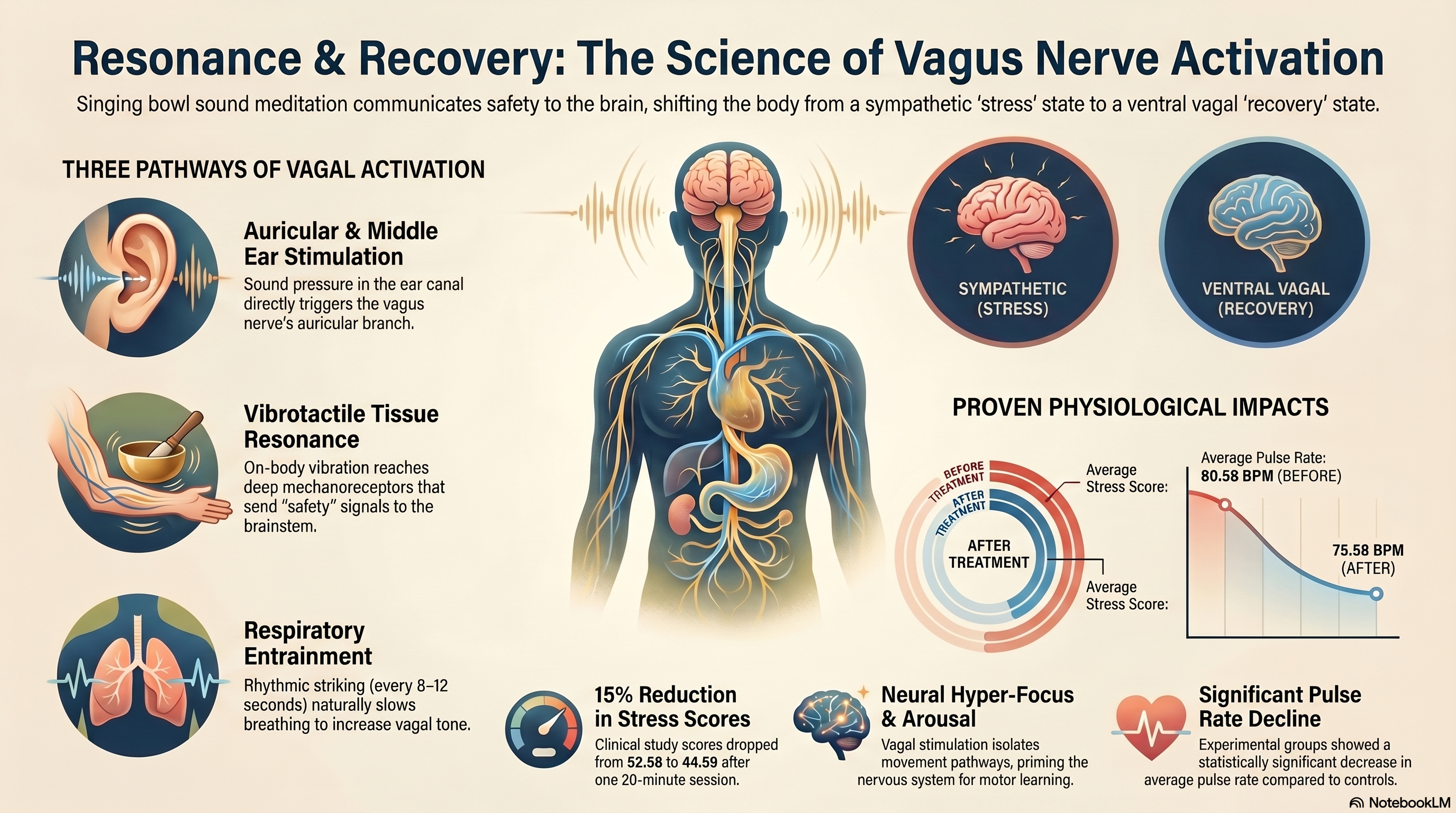
Because the response isn't being generated in the part of the brain that talks. It's coming from older, deeper structures — the limbic system, the brainstem, the autonomic nervous system — that don't respond to logic. They respond to safety. And safety isn't a thought. It's a felt experience in the body.
This is the gap somatic therapy is designed to address. It's also the central premise of Bessel van der Kolk's landmark book The Body Keeps the Score — a foundational text in modern trauma care, and a useful primer for anyone curious about why traditional therapy alone sometimes plateaus.
According to Somatic Experiencing International, founded by Peter Levine, trauma is fundamentally a nervous system dysregulation — and healing requires working directly with the body's physiology, not just with memory and narrative. Similarly, Stephen Porges' polyvagal theory demonstrates that the social engagement system — the felt sense of safety in relationship — is a physiological state, not a cognitive one. You cannot think your way into it.
Understanding why you feel the way you feel is genuinely valuable. But understanding and healing are not the same thing — and confusing them is one of the most common reasons people feel stuck after years of good, honest talk therapy.
What Talk Therapy Does Well — and Where Somatic Therapy Fills the Gap
What talk therapy does well
Talk therapy — including modalities like Cognitive Behavioral Therapy (CBT), psychodynamic therapy, Internal Family Systems (IFS), grief counseling, and sound bathing — is unmatched when the work involves:
- Understanding patterns and origins. Where did this start? Why do I do this? What am I really afraid of?
- Reframing thoughts and beliefs. Catching distortions, building new narratives, challenging the inner critic.
- Processing complex relational dynamics. Family systems, partnership conflict, communication, boundaries.
- Building skills and coping strategies. Behavioral change, emotion regulation language, decision-making frameworks.
- Sustained verbal processing. Some material genuinely needs to be spoken aloud, witnessed, and held by another human.
Our licensed clinical team — including Founder Melanie Struble, LCSW, LCADC, Wendy Coffey, LCSW, and Julia Tsakalis, LCSW (an IFS and Brainspotting therapist) — brings decades of combined experience in talk-based modalities. For many clients, this is exactly the right place to begin.
What somatic therapy does that talk therapy can't
Somatic therapy starts from a different premise: that the body keeps a record of experience the mind doesn't always have language for. Trauma, in particular, is now widely understood to live in the nervous system — not just in memory. The work of Peter Levine and Somatic Experiencing and Stephen Porges' polyvagal theory sit at the foundation of this understanding.
Somatic work uses sensation, breath, posture, and movement as the entry point to healing. Rather than asking why you feel what you feel, it gently asks: where do you feel it, and what does it want?
What somatic therapy is uniquely positioned to address:
- Stored trauma that resists narrative. Especially preverbal trauma, medical trauma, or experiences too overwhelming to fully remember.
- Chronic anxiety with no clear trigger. When your nervous system is stuck in a sympathetic state and "calming down" isn't working.
- Grief that lives in the body. A heaviness in the chest, a knot in the throat, an exhaustion that sleep doesn't touch.
- Disconnection from the body. Numbness, dissociation, eating disorders, chronic pain without medical cause.
- Burnout and freeze states. When you've gone past anxious into shut-down.
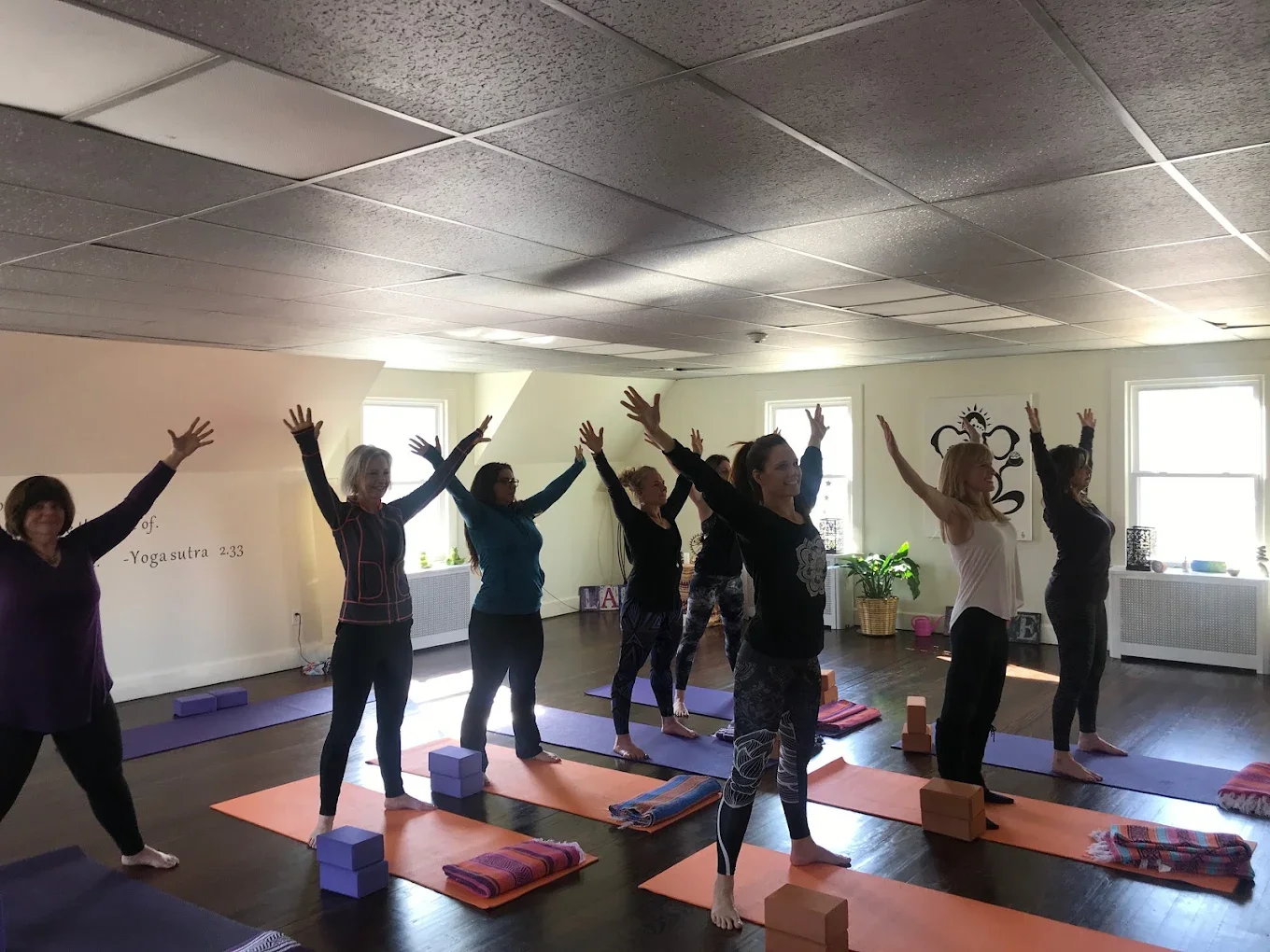
Somatic facilitators at the Center, including Amanda Lohman Yeu (ERYT-500, EOLD) and Sydney Struble, work with breath, gentle movement, and nervous system awareness in private one-on-one sessions.
A side-by-side comparison
Primary tool
- Talk Therapy: Language and conversation
- Somatic Therapy: Body sensation, breath, movement
Brain region engaged
- Talk Therapy: Prefrontal cortex (thinking)
- Somatic Therapy: Limbic system, brainstem (feeling/sensing)
Best for
- Talk Therapy: Patterns, beliefs, relationships, narrative
- Somatic Therapy: Trauma, anxiety, grief, dissociation, embodiment
Pace
- Talk Therapy: Often weekly, often long-term
- Somatic Therapy: Variable; can shift state in a single session
What you do
- Talk Therapy: Talk, reflect, process
- Somatic Therapy: Notice, breathe, move, feel
What changes
- Talk Therapy: Understanding, behavior, narrative
- Somatic Therapy: Nervous system regulation, felt sense of safety
The truth is, neither column is "better." They work on different layers of the same person.
When to Start with Each — and Why Integrating Both Is Often the Answer
When to start with talk therapy
Start with traditional psychotherapy if:
- You're navigating a clear life transition or relational issue (divorce, career change, parenting, conflict).
- You want to understand your patterns and origins before — or instead of — doing somatic work.
- You're processing grief, depression, or anxiety that's connected to identifiable life events.
- You have a strong preference for verbal processing and don't feel called to body-based work yet.
- You're managing addiction or eating disorders and need a clinical framework alongside body-based modalities.
When to start with somatic therapy
Start with somatic work if:
- You've done talk therapy and feel "stuck" — you understand intellectually but nothing has shifted in how you feel.
- Your anxiety lives more in your body than your thoughts (chronic tension, gut symptoms, sleep disruption, hypervigilance).
- You're recovering from trauma and feel that putting it into words may be too much, too soon.
- You feel disconnected from your body, numbed out, or unable to access emotion.
- You're in active burnout and your system needs regulation before insight will stick.
If you're curious about sound-based healing, explore what to expect at your first sound healing session in Bergen County.
Why integrating both is often the answer
At the Center for Mind Body Balance, we don't view somatic and talk therapy as competing options. Most of our clients work with both — sometimes with the same practitioner, sometimes across our team — because real healing rarely happens in just one register.
A typical integrated path might look like:
- Weeks 1–4: Begin with talk therapy to map what's going on, identify goals, and establish a clinical relationship.
- Weeks 4–12: Add a somatic modality — private somatic yoga, breathwork, or sound bathing — once a felt sense of safety is in place.
- Ongoing: Weave both together, with each informing the other. Insight in talk therapy gets metabolized in the body; somatic shifts get language and meaning in talk therapy.
This is how the body and mind were always meant to work — in conversation with each other.
What integrative care looks like at our Saddle River practice
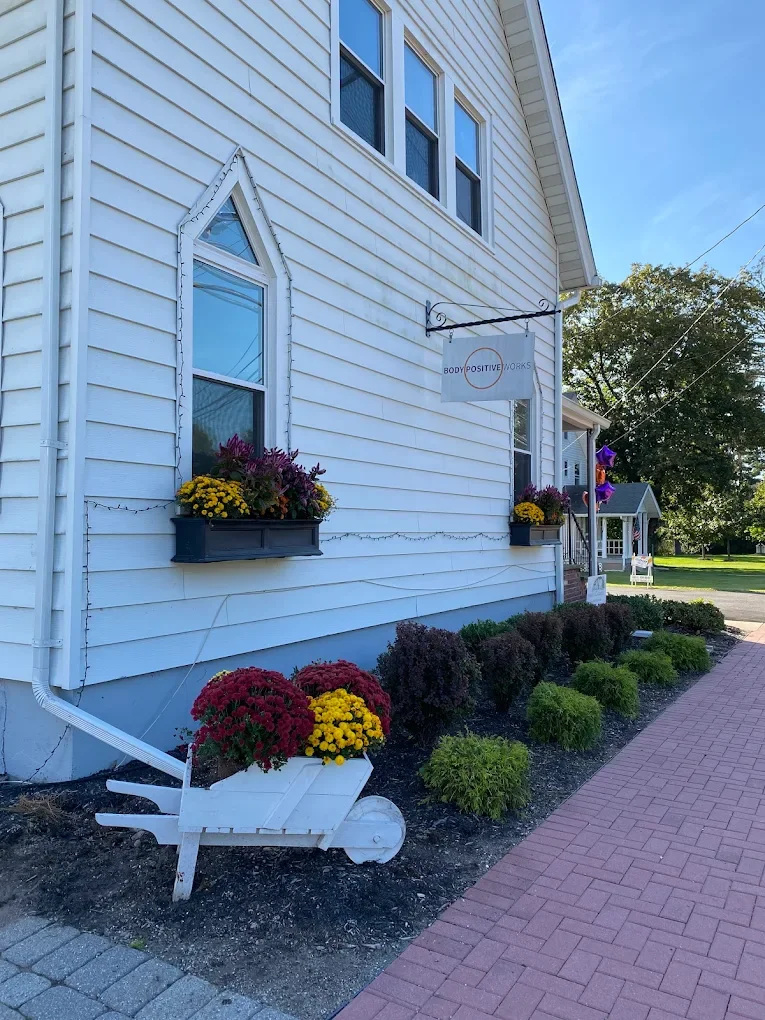
Our 200-year-old space at 96 East Allendale Road was originally built in 1820 as the Zion Evangelical Lutheran Church — the oldest surviving church in Bergen County. Today, it houses licensed therapists, somatic practitioners, sound healers, breathwork guides, dieticians, acupuncturists, and Pilates instructors under one roof.
That matters because referrals don't get lost between offices. If your therapist senses you're ready for somatic work, they walk you down the hall to meet a practitioner. If your sound healer notices grief surfacing, they connect you back to a clinician. The continuity is the medicine.
We're also a private-pay practice — which means your care isn't shaped by insurance session limits, coverage restrictions, or diagnosis codes that follow you. That kind of structural privacy matters for the kind of work somatic and trauma-informed therapy involves.
Frequently Asked Questions

What is the difference between somatic therapy and talk therapy?
Talk therapy works through language — examining thoughts, beliefs, and patterns with the prefrontal cortex. Somatic therapy works through the body — using breath, sensation, and movement to regulate the nervous system. They target different layers of the same person, and both can be transformative depending on what you need.
Can I do somatic therapy and talk therapy at the same time?
Yes, and for many people this combination produces the best outcomes. Talk therapy provides insight and narrative while somatic work helps metabolize that insight through the body. An integrative practice where clinicians and somatic practitioners collaborate directly makes this continuity especially effective.
Is somatic therapy covered by insurance?
Somatic therapy coverage varies widely. Many somatic modalities — especially those outside licensed psychotherapy — are not covered by standard insurance plans. The Center for Mind Body Balance is a private-pay practice, which means care is not shaped by insurance session limits, diagnosis codes, or coverage restrictions.
How to Choose Where to Start — and What Happens Next

Most people don't know where to begin — and that's exactly why we offer a free 15-minute discovery call. It's not an intake. It's a conversation.
You tell us what's going on. We listen, ask a few questions, and help you figure out which practitioner and which modality is the most supportive starting point. If we're not the right fit, we'll say so.
What to expect on a discovery call:
- 15 minutes, no charge, no commitment required
- A real conversation with Melanie — not an automated form or a front-desk screening
- A plain-language recommendation: talk therapy first, somatic first, or an integrated path
- Honest referrals out if we aren't the right fit for your needs
You don't have to choose between mind and body. You don't have to figure this out alone. And you don't have to be sure of anything before reaching out.
Call (201) 708-8448 or book your free discovery call. Melanie, our founder, answers every call.