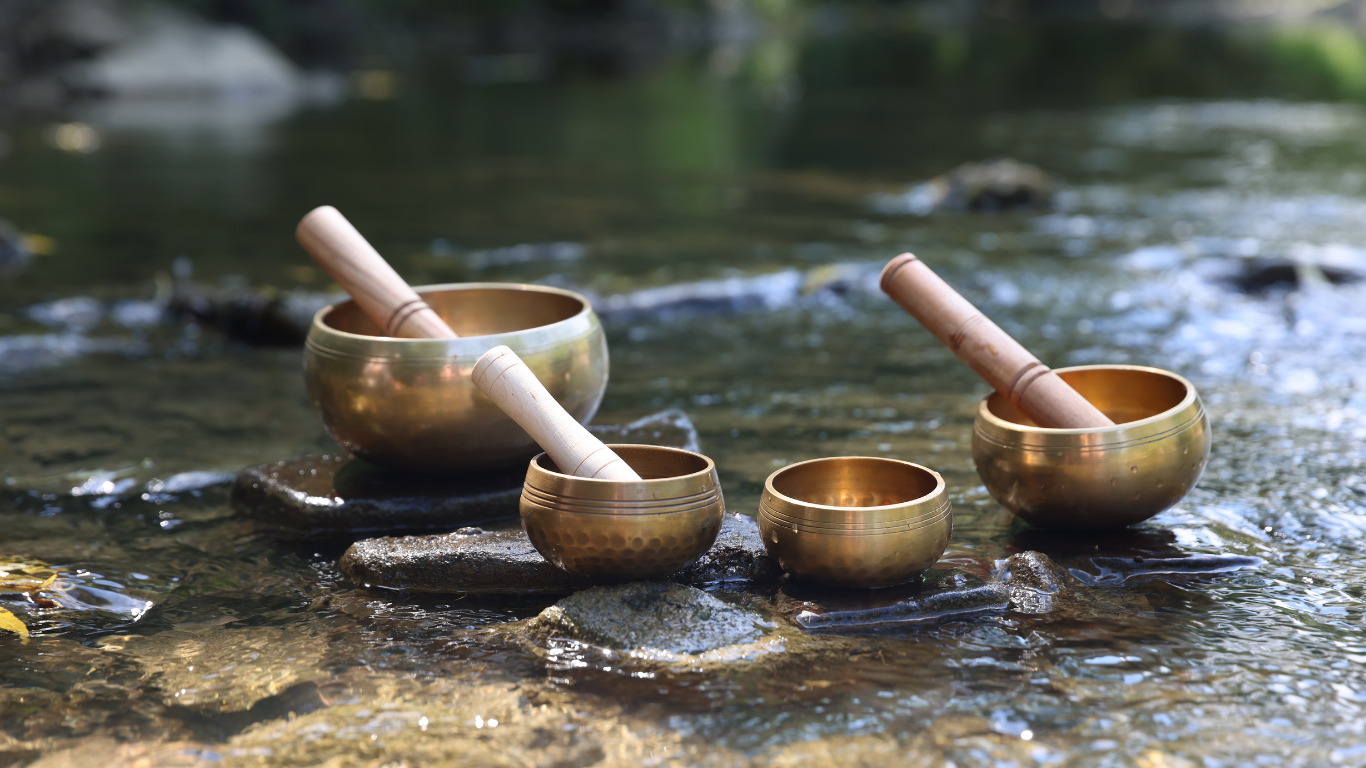
You're curious about sound healing. You've also rolled your eyes at sound healing.
Both of these can be true at once — and if they are, you're in good company. Many of the people who walk into the Center for Mind Body Balance in Saddle River for their first sound bath describe themselves the same way: "Skeptical, but my therapist suggested it." Or, "I needed to do something different."
This guide is written for that person. No mysticism, no convincing. Just an honest walk-through of what actually happens, why it works, and how to decide whether your first session is worth booking.
What Sound Healing Actually Is
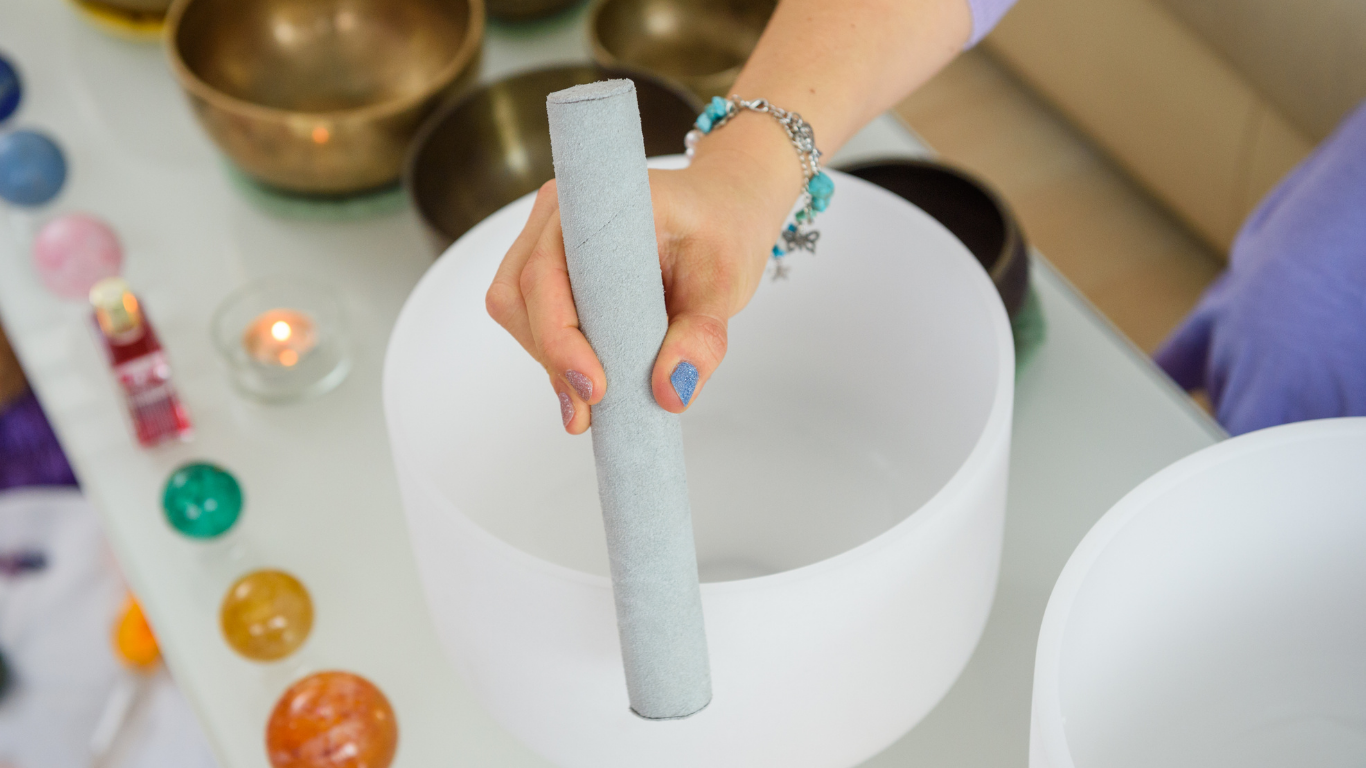
Sound healing — sometimes called sound therapy, sound bath, or vibrational healing — is the use of specific instruments to produce sustained tones and vibrations that the body absorbs through both hearing and physical sensation.
The most common instruments include:
- Tibetan and crystal singing bowls — produce long, layered tones with rich overtones
- Gongs — full-spectrum sound that engages the whole body
- Tuning forks — applied near or on the body for targeted frequency work
- Drums and rattles — rhythmic, grounding, often used to begin or end a session
- Voice — chanting, toning, or guided sound
You lie down. The practitioner plays. You receive.
That's it. There's no chanting required of you, no specific belief system, no "doing it right." If you can lie still on a yoga mat for 45–60 minutes, you can do sound healing.
The Actual Science Behind Sound Healing (Yes, There Is Some)
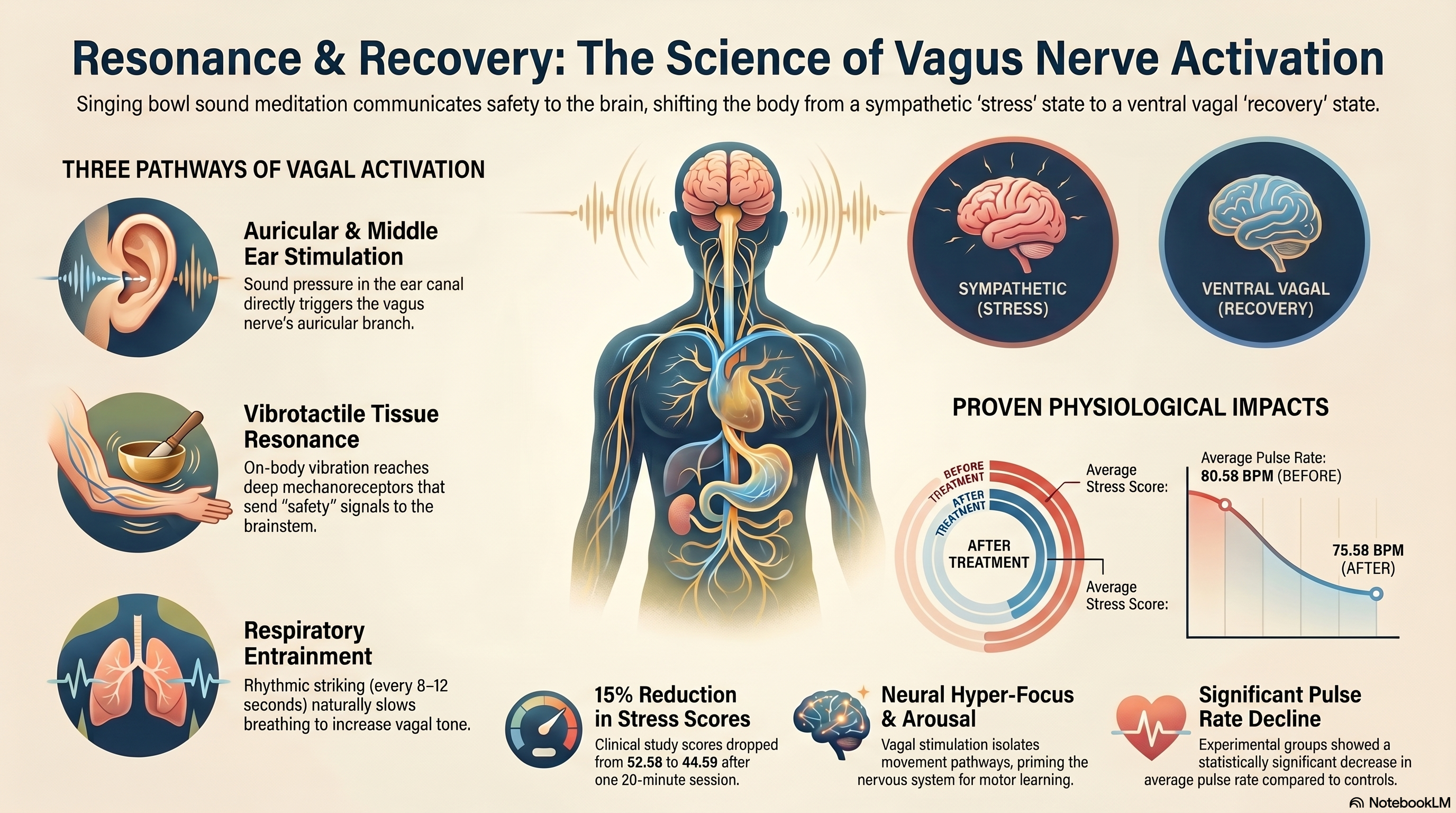
Sound healing isn't only ancient — it's also being studied. The National Center for Complementary and Integrative Health (NCCIH), part of the NIH, classifies it within mind-body practices alongside yoga and meditation. A few of the better-documented effects:
Heart rate variability and autonomic shift
A 2017 study published in the Journal of Evidence-Based Complementary & Alternative Medicine found that participants in singing bowl meditations showed significant reductions in tension, anger, fatigue, and depressed mood compared to controls. Heart rate variability — a measure of nervous system flexibility — improved.
Reduction in stress markers
Research on sound therapy has shown decreases in cortisol and reported anxiety, particularly in clinical populations dealing with chronic stress, fibromyalgia, or post-treatment recovery.
Brainwave entrainment
Sustained tones can shift the brain from beta states (active, anxious thinking) toward alpha and theta states (relaxed, meditative, dreamlike). This is similar to what experienced meditators reach — but accessible faster, with less practice required.
Vagal tone
The vibrations from low-frequency instruments (especially gongs) physically stimulate the vagus nerve, the body's main parasympathetic pathway. The work of Stephen Porges and the Polyvagal Institute explains why stimulating the vagus nerve is one of the most reliable ways we have to shift out of fight-or-flight.
None of this means sound healing replaces medical or mental health care. It means there's a measurable, physiological reason it makes you feel different afterward.
What Happens in a Typical Sound Healing Session at Our Saddle River Practice
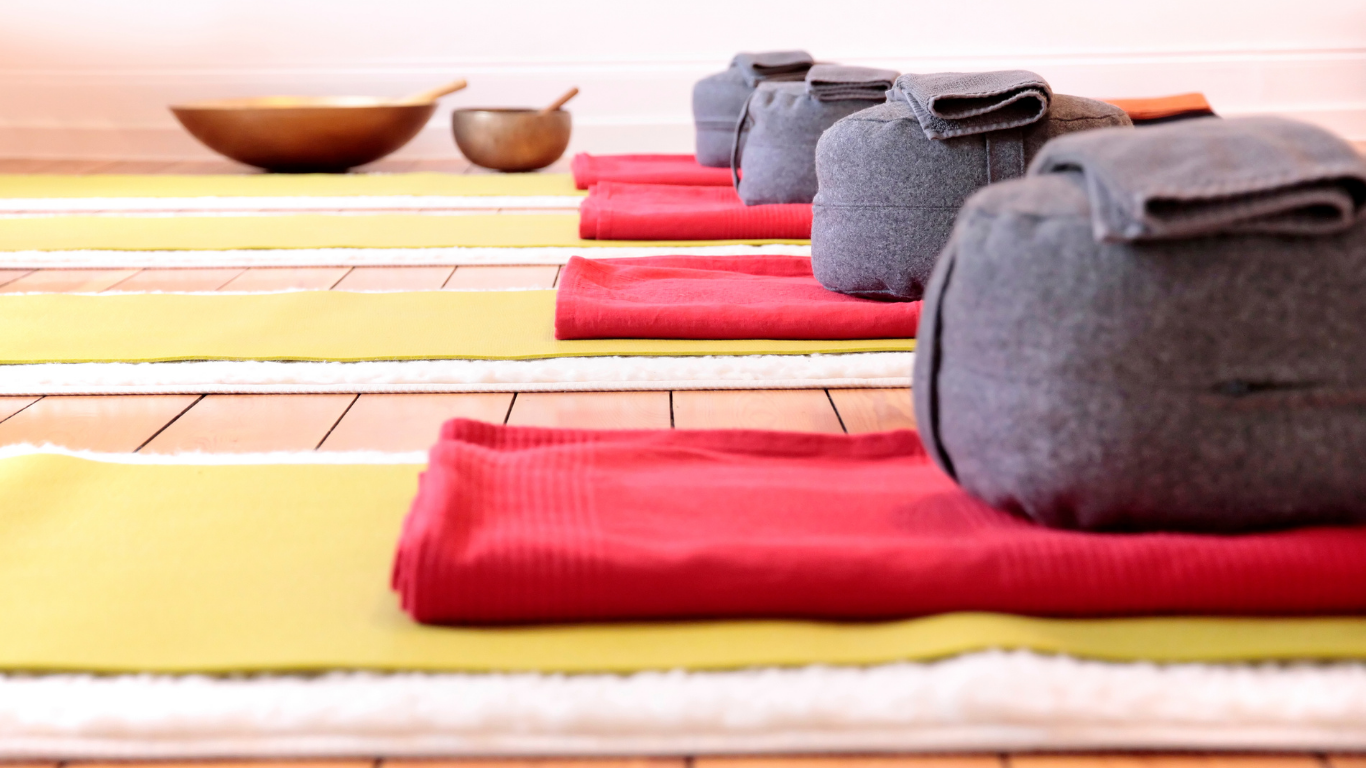
Sound healing at the Center is held in our restored 1820 building — high ceilings, generous natural light, and the acoustic warmth of a space that was literally designed in the 19th century to carry sound. The room itself does some of the work.
Here's the typical flow of a 60-minute group session:
- Arrival (10 minutes). You arrive a few minutes early, take off your shoes, and settle onto a yoga mat with a bolster, blanket, and pillow already laid out. The practitioner introduces themselves and asks if anyone has injuries, sound sensitivities, or specific intentions. You don't have to share if you don't want to.
- Grounding (5–10 minutes). A short guided breath or body scan to drop you out of your day and into your body.
- The sound experience (35–40 minutes). You lie down. The practitioner plays through a sequence of instruments — bowls first, then gongs, then often back to bowls or tuning forks for closing. You don't have to do anything. You don't have to "meditate." You can drift, fall asleep, cry, laugh, think about your grocery list. All of it is allowed.
- Integration (5–10 minutes). The sound ends. You stay still for a few minutes. The practitioner gently brings you back and creates a brief space for sharing if you want it (you don't have to).
You leave feeling — most people report some version of — softer, slower, and clearer.
What to wear and bring
Wear comfortable layers. Body temperature drops in deep relaxation, so bring something warm. Bring water and an open mind. We provide mats, bolsters, blankets, and pillows. Don't worry about prior experience, flexibility, or knowing what you're doing. There's nothing to do.
Common Experiences During Sound Healing — and Who Benefits Most
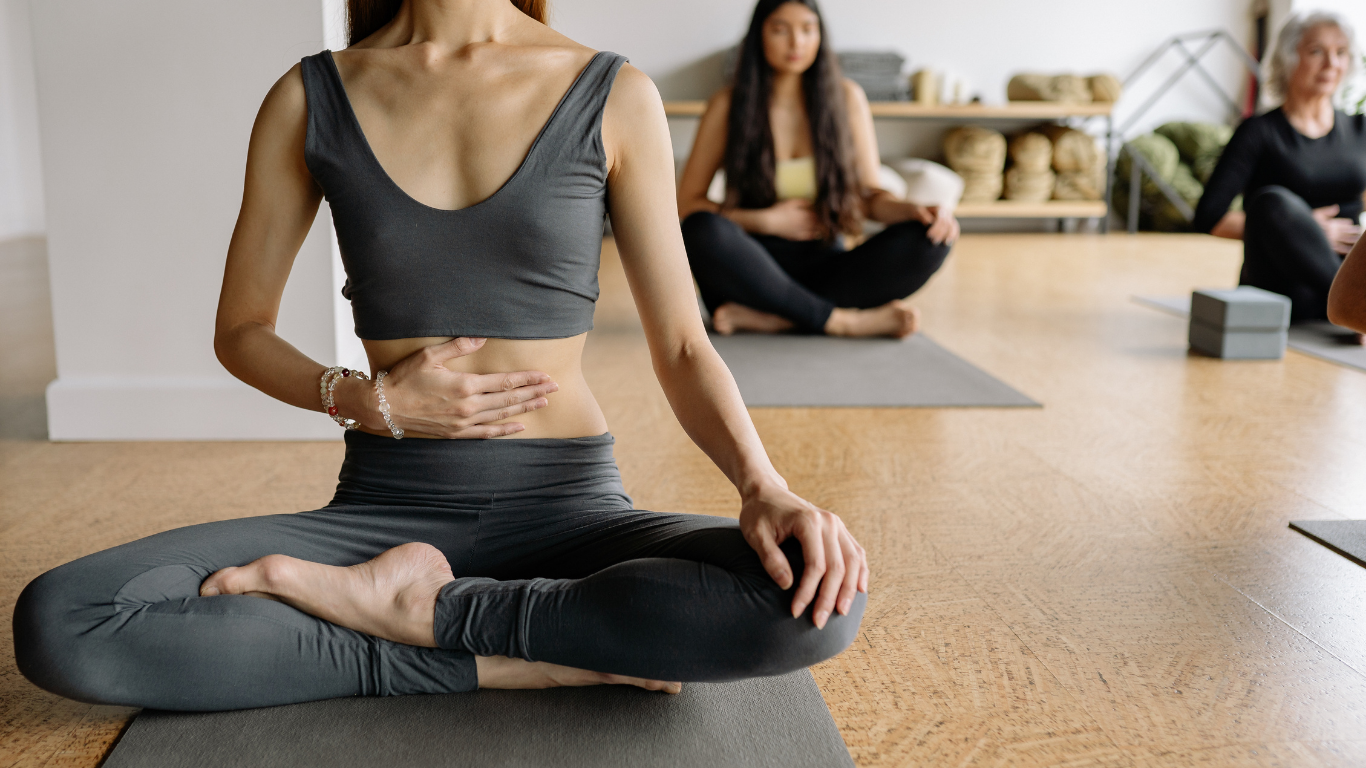
Almost everyone experiences something. Almost no one experiences the same thing.
Common reactions include:
- Visual imagery or color. Closed-eye visuals are extremely common, especially during gongs.
- Emotional release. Tears come up for some people, often without an attached "reason." This is normal.
- Falling asleep. Also normal. The body takes what it needs.
- Tingling, twitching, or temperature shifts. Nervous system release.
- Nothing dramatic at all. Also normal. Many people just feel deeply rested. That counts.
- Vivid sleep that night. Sound work often shows up in dreams the next 1–2 nights.
If you have a history of trauma, dissociation, or seizure disorder, mention it during booking — your practitioner can adjust intensity and instruments accordingly. Reiki Master and Sound Healing Practitioner Alison Edsall, RN, is a registered nurse who brings clinical care to her sessions; for clients with medical complexity, that combination matters.
Who benefits most
Sound healing tends to be especially supportive for people dealing with:
- Chronic anxiety and a busy mind that can't slow down
- Sleep difficulty and nervous system dysregulation
- Grief — particularly the heavy, body-locked kind that words don't reach
- Burnout and recovery from prolonged stress
- Post-treatment recovery (chemotherapy, surgery, illness)
- People who've tried meditation and "can't do it" — sound bypasses the effort
It's not a treatment for clinical mental health conditions on its own — but it pairs powerfully with therapy and other modalities. If you're weighing whether somatic-style work like this fits your situation, our companion guide somatic therapy vs. talk therapy is a useful next read.
How sound healing fits into a broader plan
At the Center, sound healing is rarely the only thing a client does. More often, it's woven into a larger care plan — a regular session that complements ongoing psychotherapy, somatic yoga, breathwork, or Reiki. For many clients, especially those with trauma histories, sound healing functions as a "down-regulator" between more activating modalities. It gives the nervous system a place to rest and integrate.
Click here to explore the full services menu or book a free 15-minute discovery call to find the right modality combination.
Frequently Asked Questions About Sound Healing in Bergen County
What should I wear to a sound healing session?
Wear comfortable layers. Body temperature drops in deep relaxation, so bring something warm. No special clothing is required — the studio provides mats, bolsters, blankets, and pillows. Just arrive comfortably dressed and ready to lie still for about an hour.
Is sound healing scientifically proven to work?
Yes, within limits. A 2016 study in the Journal of Evidence-Based Complementary and Alternative Medicine found significant reductions in tension, anger, fatigue, and depressed mood after singing bowl meditation. Research also documents decreases in cortisol, improvements in heart rate variability, and brainwave shifts toward relaxed alpha-theta states. It does not replace medical or mental health care.
What if I fall asleep during a sound bath?
Falling asleep is completely normal and considered a sign the body is taking what it needs. Many practitioners say sleep during a session is one of the most restorative responses possible. There is nothing to do right or wrong — the sound works whether you are awake or drifting.
Ready to Book Your First Sound Healing Session in Saddle River?
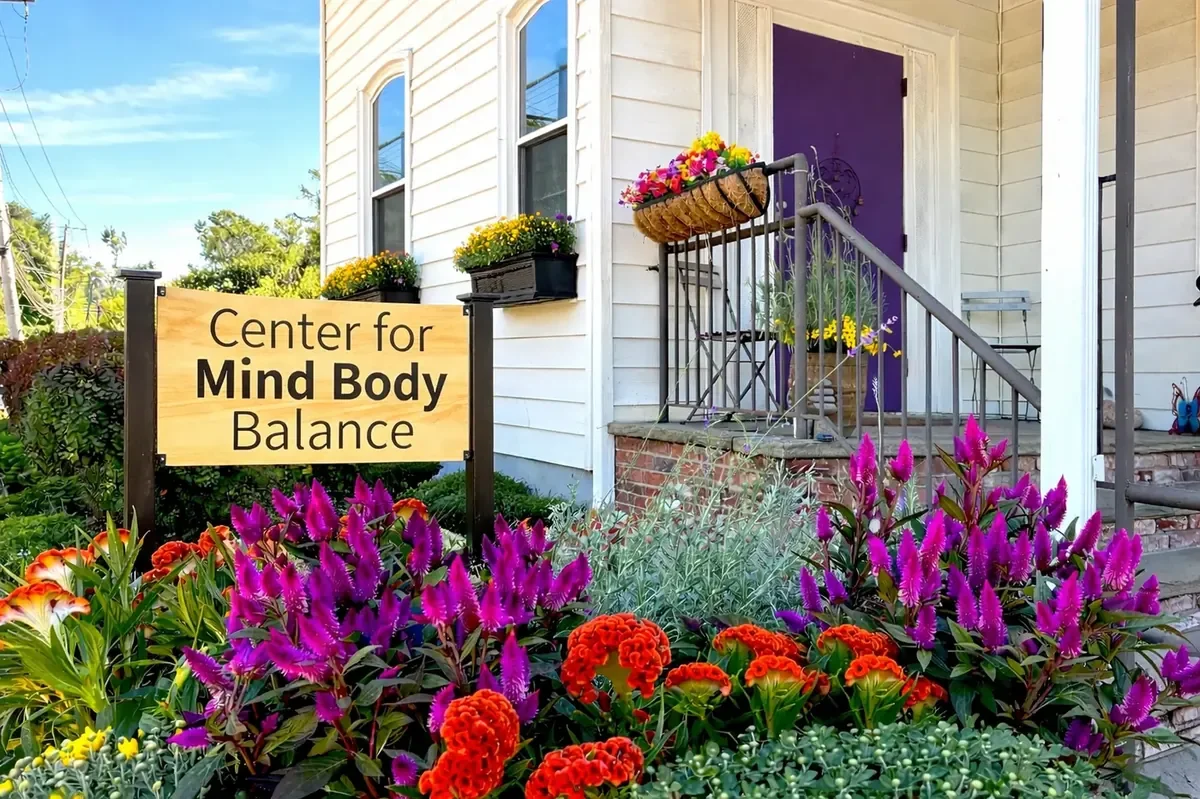
We're at 96 East Allendale Road in Saddle River — easy access from Route 17, the Garden State Parkway, and the New York border. Clients regularly come from Wyckoff, Mahwah, Allendale, Ridgewood, Upper Saddle River, Ramsey, and across Rockland County, NY.
Here's how to get started:
- Browse the current class schedule to see when sound healing sessions are offered this month.
- Call (201) 708-8448 or book your free 15-minute discovery call online — we'll help you decide whether to start with a group session or a private one-on-one.
- Show up in layers. We handle everything else.
If you're not sure whether sound healing is right for you, the free call is the fastest way to figure that out. You don't have to be a believer. You just have to be willing to lie down.