Introduction
Reiki and sound healing have exploded in popularity here in Bergen County over the last five years — so chances are you've encountered both. And if you have, you've probably noticed something frustrating: the people offering them and the people debunking them tend to use radically different vocabularies. The practitioners talk about energy fields and chakras. The skeptics talk about placebo. Neither side gives you a clear answer to the practical question: what do these things actually do, and how do I decide which one might be useful to me?
That is the question we will try to answer in this guide — with the language of nervous system physiology, which sits underneath both modalities whether their proponents talk about it that way or not.
Why both can produce real effects
Research on touch alone — independent of any specific tradition — shows that intentional, attentive touch from a calm practitioner reliably lowers cortisol, slows heart rate, and increases vagal tone. Research on sound — particularly low-frequency vibration in the 4-12 Hz range — shows it shifts brainwave activity into alpha and theta states associated with deep relaxation, creativity, and the early stages of sleep. This is consistent with the polyvagal framework developed by Stephen Porges, which demonstrates that the felt sense of safety is a physiological state shaped by sensory input, not a cognitive choice.
You do not have to believe in any particular metaphysical framework for these effects to occur. They occur because of what happens to a nervous system in a safe environment, receiving attentive sensory input, with permission to drop the ongoing work of vigilance.
How Reiki Works (and Doesn't)
Reiki originated in early-20th-century Japan and was systematized by Mikao Usui. As a modality, it involves a trained practitioner placing hands lightly on or just above a clothed, resting client and holding specific positions for several minutes each. The traditional language, taught by the International Center for Reiki Training, describes the practitioner channeling universal life force energy to support the client's natural healing capacity.
What you experience
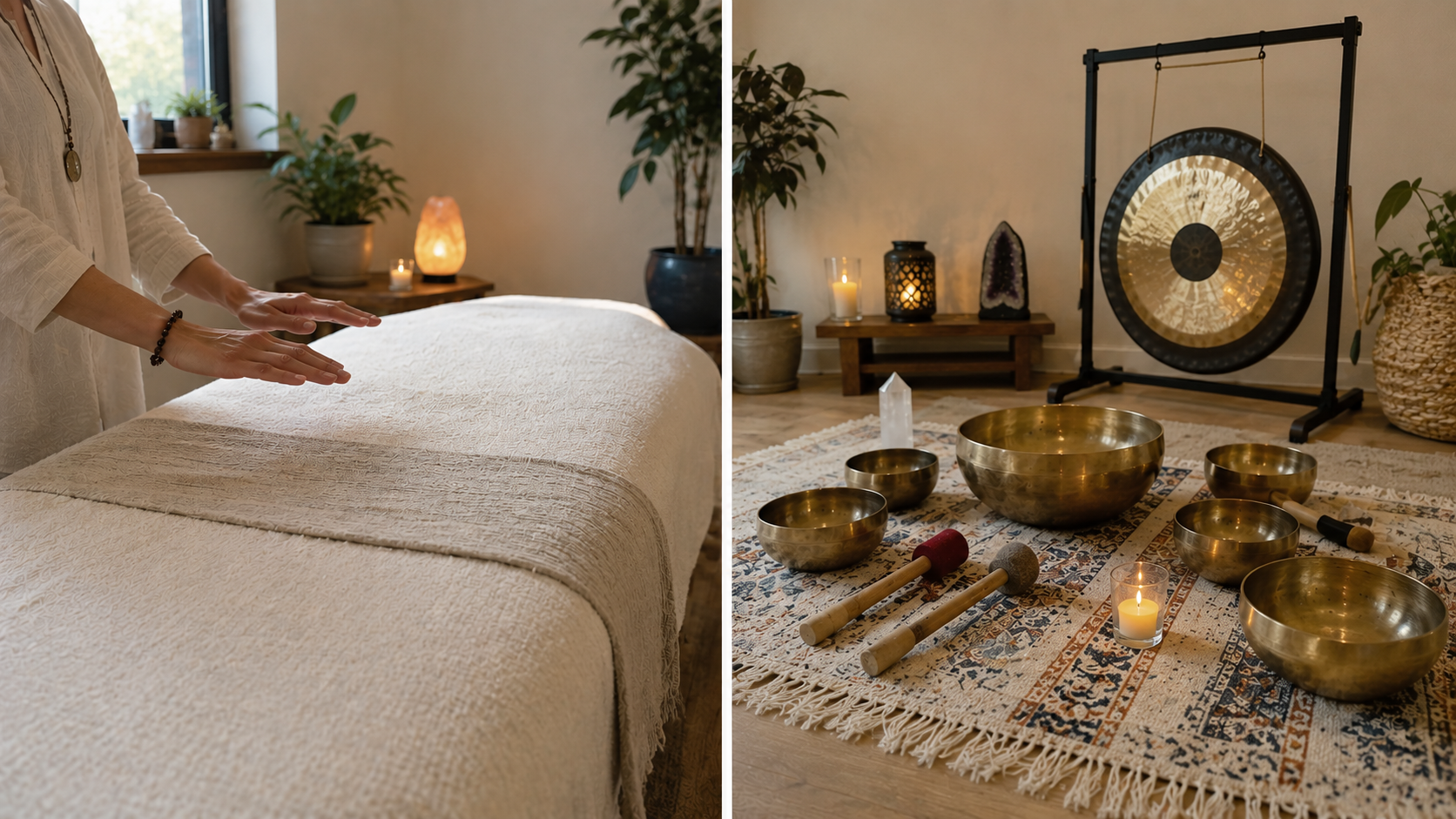
A reiki session typically runs 45 to 60 minutes. You stay fully clothed, lying on a massage table. The practitioner moves through a series of hand positions — head, shoulders, chest, abdomen, legs — sometimes touching lightly, sometimes hovering inches above the body. Most clients report some combination of:
- Deep relaxation, often surprising in its depth
- Warmth, tingling, or a sensation of weight in the body
- Emotional release — occasional tearfulness, sometimes accompanied by a sense of lightness afterward
- Falling asleep
- Vivid imagery or memories surfacing
What the research shows
Studies on reiki are mixed in their interpretations but consistent in one finding: clients receiving reiki show measurable physiological changes — reduced anxiety, lower cortisol, improved sleep, reduced pain perception — relative to clients receiving no intervention. Reviews compiled by the National Center for Complementary and Integrative Health note that the interpretive debate is whether those changes are caused by the specific reiki protocol or by the general effect of attentive, calming touch from a focused practitioner in a quiet room.
From the perspective of an integrative clinician, that debate is largely academic. The intervention works for many clients; that it works through "general nervous system regulation" rather than "specific energy transmission" does not make the effect less real.
Who reiki tends to fit
- People who respond well to touch and want a quiet, contemplative experience
- People in burnout who need an hour of permission to do nothing
- People recovering from medical treatment or surgery
- People who find guided meditation difficult but want a meditative state
If you have already explored sound healing and want to try something different — or you are curious about reiki specifically after reading our first sound healing session guide — reiki is often a natural next step.
How Sound Healing Works (and How It Differs)
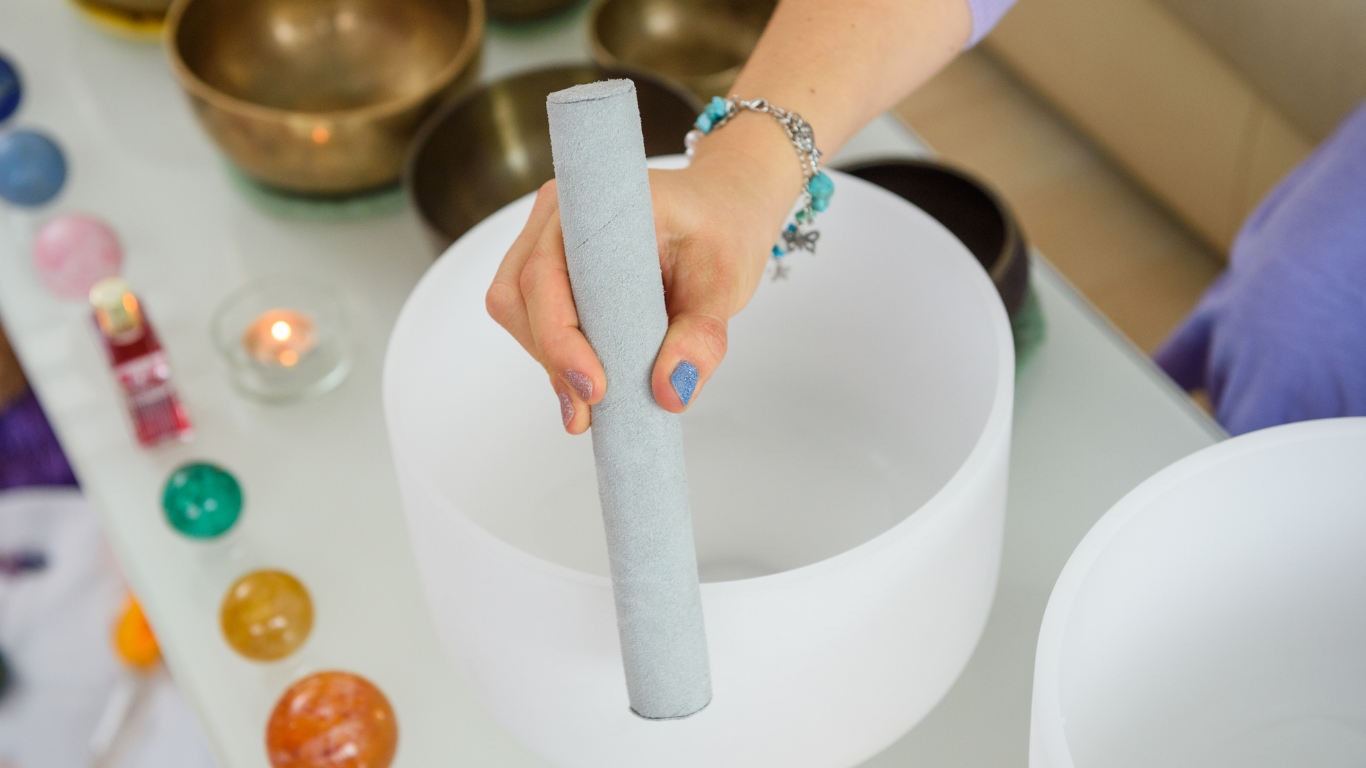
Sound healing — sometimes called sound bathing or vibrational therapy — uses instruments specifically chosen for their resonant frequencies: Tibetan singing bowls, crystal singing bowls, gongs, tuning forks, chimes, and the human voice. A practitioner plays them in patterns designed to entrain the listener's brain and body into slower, more coherent states.
What you experience
A sound healing session runs 45 to 75 minutes. You lie down, fully clothed, on a mat or massage table. The practitioner plays a layered sequence of instruments — sometimes near the body, sometimes across the room. Many clients experience:
- A drift into something between waking and sleep
- Strong physical sensations: vibration in specific body parts, temperature shifts, a feeling of being "held" by sound
- Time distortion — 60 minutes feels like 20, or like 3 hours
- Emotional surfacing, particularly grief or relief
- Mental quiet that is harder to access through seated meditation
Mechanism
The primary mechanism is acoustic entrainment. The brain has a tendency to synchronize its dominant frequency to consistent external rhythms — a phenomenon that has been documented in EEG research for decades. Slow, sustained tones — particularly in the alpha (8-12 Hz) and theta (4-8 Hz) ranges — tend to pull the brain out of beta-dominant (active thinking) states and into the slower frequencies associated with deep rest and the meditative states experienced by long-time practitioners.
Vibration also has direct somatic effects. The chest and abdomen, in particular, respond to low-frequency sound with a felt sense of resonance, which appears to activate the vagus nerve and support parasympathetic shift.
Side by side: reiki and sound healing compared
- Primary input — Reiki: touch and focused attention. Sound healing: vibration and sound.
- Sensory experience — Reiki: quiet and internal. Sound healing: immersive, sometimes intense.
- Pace — Reiki: slow, sustained holds. Sound healing: layered and dynamic.
- Best for — Reiki: burnout, quiet repair, recovery after medical care. Sound healing: stuck states, grief, busy minds.
- Belief required — Reiki: none. Sound healing: none.
- Typical format — Reiki: usually one-on-one. Sound healing: often group sound baths.
Who sound healing tends to fit
- People with very busy minds who struggle to access stillness through traditional meditation
- People processing grief or transition
- People who respond strongly to music and sound
- Skeptics — surprisingly often. The physical-vibration mechanism is concrete enough that even people uncomfortable with "energy" language find sound healing accessible
How to Combine the Two (and Why Many Clients Do)
In our experience working with clients across Bergen County — Saddle River, Wyckoff, Allendale, Mahwah, and the surrounding towns — most people who try one modality end up curious about the other. That is not a marketing observation; it is a clinical one. The two reach different layers, and once one layer settles, the next layer often surfaces.
A common sequence
Many of our clients move through something like this:
- Begin with sound healing in a group setting — the most accessible, lowest-commitment entry point
- Move to a private sound session or reiki when the group experience starts surfacing material that feels personal
- Layer in a complementary clinical modality — talk therapy, somatic work, or acupuncture — as the body settles enough to take on more substantive change
- Use periodic reiki or sound healing as ongoing nervous system maintenance, the way someone else might use weekly exercise
When body-based modalities are not enough
Both reiki and sound healing are powerful nervous system interventions. Neither is a replacement for clinical care when trauma, depression, addiction, or acute mental health symptoms are part of the picture. A reputable practitioner will tell you when what you are bringing into the room exceeds the scope of energy work and a referral to a clinician is the right next step. At an integrative practice, that referral happens down the hall, not across town.
Frequently Asked Questions
Is reiki or sound healing better for anxiety?
Both can help. Sound healing tends to be a faster intervention for anxious people with very active minds — the vibration gives the nervous system something concrete to entrain to. Reiki tends to work better for people whose anxiety presents as bracing or hypervigilance and who respond well to touch. Many clients use both.
Do I have to believe in energy work for it to work?
No. Both modalities produce measurable physiological changes regardless of belief. What you bring to the experience matters less than your willingness to lie down and let your nervous system receive input that does not require thinking.
Can I combine reiki or sound healing with therapy?
Yes — and at an integrative practice, this is often how the best outcomes happen. Body-based modalities create the regulated state in which talk therapy can land. We discuss this more in our somatic vs. talk therapy guide.
How to Decide Where to Start
Most people don't know where to begin in an integrative practice — and that's exactly what the free 15-minute discovery call is for. It's not an intake. It's a conversation.
You tell us what's happening. We listen, ask a few questions, and help you figure out the right starting point. If we're not the right fit for what you need, we'll point you somewhere that is.
What to expect on a discovery call:
- 15 minutes, no charge, no commitment required
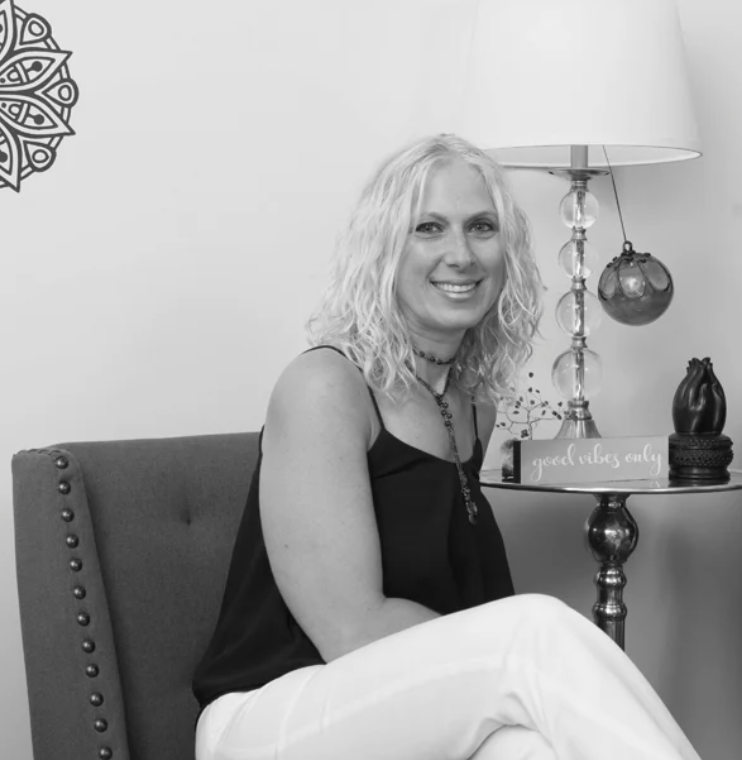
- A real conversation with Melanie — not an automated form or a front-desk screening
- A plain-language recommendation tailored to your situation
- Honest referrals out if we aren't the right fit
Call (201) 708-8448 or book your free discovery call. Melanie, our founder, answers every call.