
There is a specific kind of quiet that happens at a holiday table when someone announces they are being good today. Most people at that table register it and say nothing. For at least one of them it will shape the rest of the meal, and probably the rest of the week.
This is written for the people who find these gatherings genuinely hard, and for the people sitting near them who would like not to make it worse.
Why this particular day is difficult
Several things converge that do not usually appear together.
- The meal is the point.Food is the organizing event rather than something incidental. There is no way to move through the day without engaging with it, and no way to opt out without the opting out itself becoming visible.
- Eating happens in front of an audience.People eat differently when watched, and holiday meals are unusually observed. Plates are visible, servings are commented on, seconds are noticed.
- Family is the audience.The people present are the ones with the longest history of opinions about your body, and often the ones whose opinions formed the pattern in the first place.
- The commentary is at its annual maximum.Diet talk peaks in late November and December, and it arrives from every direction at once, including from people who are describing themselves rather than you.
Any one of these is manageable. All four at the same table for four hours is a different proposition, and people who find it difficult are responding to something real rather than being oversensitive.
The commentary, and why it lands harder than people think
The remarks that circulate at these tables tend to fall into a few categories, and it is worth being explicit about why each one causes trouble.
Comments about weight change are treated as compliments and function as surveillance. Telling someone they look great because they have lost weight communicates that their body has been under observation, that the previous version was worse, and that the assessment will continue. It also lands unpredictably, because the listener may have lost weight through illness, grief, stress, or an eating disorder. There is no reliable way to know, which is a sufficient reason not to comment at all.
Moral language about food, being good, being bad, earning it, deserving it, sorts food into virtue categories. For someone working to get out of that framework, hearing it repeated all afternoon by people they love is genuinely undermining, and it is usually said without any intent to affect anyone.
Self-directed commentary is not private. When someone narrates their own guilt about what is on their plate, everyone at the table hears it, and everyone at the table does a quick comparison. People frequently believe that criticizing their own body harms nobody but themselves. It does not work that way at a shared table.
January intentions announced in November set the terms of the room. They establish that the meal is something to be corrected afterward, which is precisely the frame a person in recovery is trying to step out of.
Where this pattern usually starts
For a great many people the family table is not where their difficulty with food began incidentally. It is where it began.
Food commentary within families tends to be intergenerational. A parent who was told as a child to watch it repeats a version of the same thing without recognizing where it came from, and often while intending to protect their child from what they experienced. The commentary changes vocabulary across generations, from thin to healthy to clean to whatever the current framing is, and the underlying transaction stays the same. The child learns that their body is a subject of ongoing family assessment.
This matters at a holiday table because you are not only encountering remarks in the present. You are encountering them in the room where you first learned them, from the people who first said them, which is why a comment that would be mildly irritating from a colleague can be genuinely destabilizing from an aunt.
It also explains why these gatherings often surface material that has been settled for years elsewhere. The environment is doing the work, not the sentence.
If you are the one who finds this hard
What actually helps is mostly structural, mostly decided in advance, and has very little to do with the food itself.
- Decide the shape of the day beforehand.Not a plan about eating. A plan about the day. Who you are sitting near, what time you arrive, when you leave, and where you can go for ten minutes if you need to.
- Have one ally in the room.One person present who knows this is hard for you and does not need it explained in the moment. A look across the table from someone who understands does more than any prepared line.
- Eat as you normally would beforehand.Skipping the meal usually increases distress rather than reducing it, and arriving depleted makes everything harder to manage. Eating normally through the day is the more supportive choice.
- You are allowed to not engage.You are not obligated to respond to diet talk, correct it, or educate anyone. Changing the subject is a complete strategy and it costs far less than the alternative.
- Plan the after, not just the during.A stretch of time afterward that is yours, and ideally a person to talk to. The hours after the meal are when most of the difficulty actually lands.
If you are sitting near someone who finds this hard
You may not know who they are, which is the argument for changing the default rather than making exceptions for particular people.
- Not the loss, not the gain, not the compliment version. There is no safe version of this and the absence of comment is never experienced as unkind.
- Do not comment on what anyone is eating, including how little. Noticing someone's plate out loud is rarely received the way it is intended.
- Skip the moral vocabulary about food, both about your plate and about theirs.
- Do not urge second helpings on anyone, and do not remark when someone declines. Both turn a private decision into a public one.
- If someone changes the subject away from food or bodies, let it change. That is often a request, and it is usually the only one that will be made.
None of this requires knowing anyone's history. It requires treating other people's bodies and plates as not being topics, which costs nothing and quietly improves the day for people you will never identify.
Grief is often at this table too
Food and memory are tightly linked, and holiday meals carry a great deal of it. The dish someone always made. The chair that is empty. The recipe in handwriting that belongs to a person who is gone. For families in a first or second year of loss, the meal can be the hardest hour of the season, and it is worth knowing thatgrief at the holidaysbehaves this way rather than being caught off guard by it.
Grief and eating also interact directly. Appetite frequently disappears or becomes erratic during acute loss, and for anyone with a history of disordered eating, a period of grief can quietly reactivate old patterns under cover of a reasonable explanation. That combination is worth watching for rather than waiting out.
When to involve a clinician
Eating disorders are frequently missed because people assume they have a visible appearance. They do not. A person of any size can have a serious eating disorder, and appearance is among the least reliable indicators available.
A few things are worth a clinical conversation regardless of what anyone weighs.
- Thoughts about food, eating, or your body taking up a significant share of your mental life.
- Avoiding meals with other people, or social events because food will be present.
- Eating patterns that feel outside your control, in either direction.
- Compensating after eating, in any form.
- A previous eating disorder history and a sense that something has been shifting back.
These conditions respond well to treatment, and they respond better earlier. The most common reason people delay is a belief that they are not sick enough to warrant help, which is itself a recognized feature of the illness rather than an accurate assessment of it.
Frequently Asked Questions
How do I respond when someone comments on my body?
You are not required to respond at all. A neutral acknowledgment and a change of subject is complete. Some people find a light, low-heat line useful, such as saying they would rather talk about something else. Engaging on the substance almost always extends the conversation.
Should I tell my family what I am dealing with?
That depends entirely on the family and on what you want from telling them. A large holiday gathering is rarely the right setting for a disclosure. If you want the behavior to change, a private conversation with one person at a neutral time works better than an announcement at the table.
My child has an eating disorder. What do I do about the holiday meal?
Ask their treatment team for guidance specific to where they are, because the right approach varies a great deal by stage and by diagnosis. In general, removing food commentary from the whole gathering helps more than any special arrangement for one person, since special arrangements draw attention to exactly the thing you are trying to make less charged.
Is it wrong to have any goals about food or health?
No. The distinction that matters is whether the goal is expanding your life or narrowing it. Something that means you decline gatherings, avoid whole categories of food, or spend a substantial part of the day thinking about it is functioning differently from a goal, regardless of how it is described.
What does weight-neutral actually mean?
It means care that focuses on health behaviors and psychological wellbeing rather than on weight change as the outcome. It does not mean ignoring physical health. It means not using weight as the measure of it, which for people with disordered eating histories is frequently the difference between treatment that helps and treatment that makes things worse.
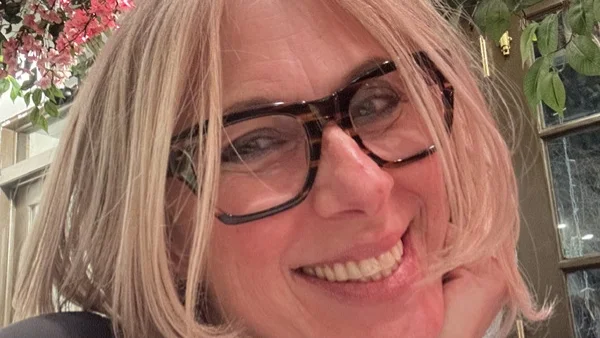
If This Season Is Harder Than You Are Letting On
Melanie Struble is a licensed clinical social worker and licensed clinical alcohol and drug counselor with more than thirty three years of experience, and eating disorders have been a central part of that work. If any of this describes your November, the conversation is available and it does not require you to have decided anything in advance.
The free 15 minute discovery call is a conversation, not an intake. Nothing about it requires you to explain more than you want to, and if what you describe needs a level of care beyond what we provide, we will say so and help you find it.
Call(201) 708-8448orbook your free discovery call. We are at 96 East Allendale Road in Saddle River, and we see clients across Bergen County in person and throughout New Jersey by video.
If you are in crisis, the National Alliance for Eating Disorders helpline is available at 1-866-662-1235, and the 988 Suicide and Crisis Lifeline is available by call or text at 988.
This blog post is for informational purposes only and does not constitute professional mental health advice, diagnosis, or treatment.
Not sure if this is right for you? Take the 30-second match.